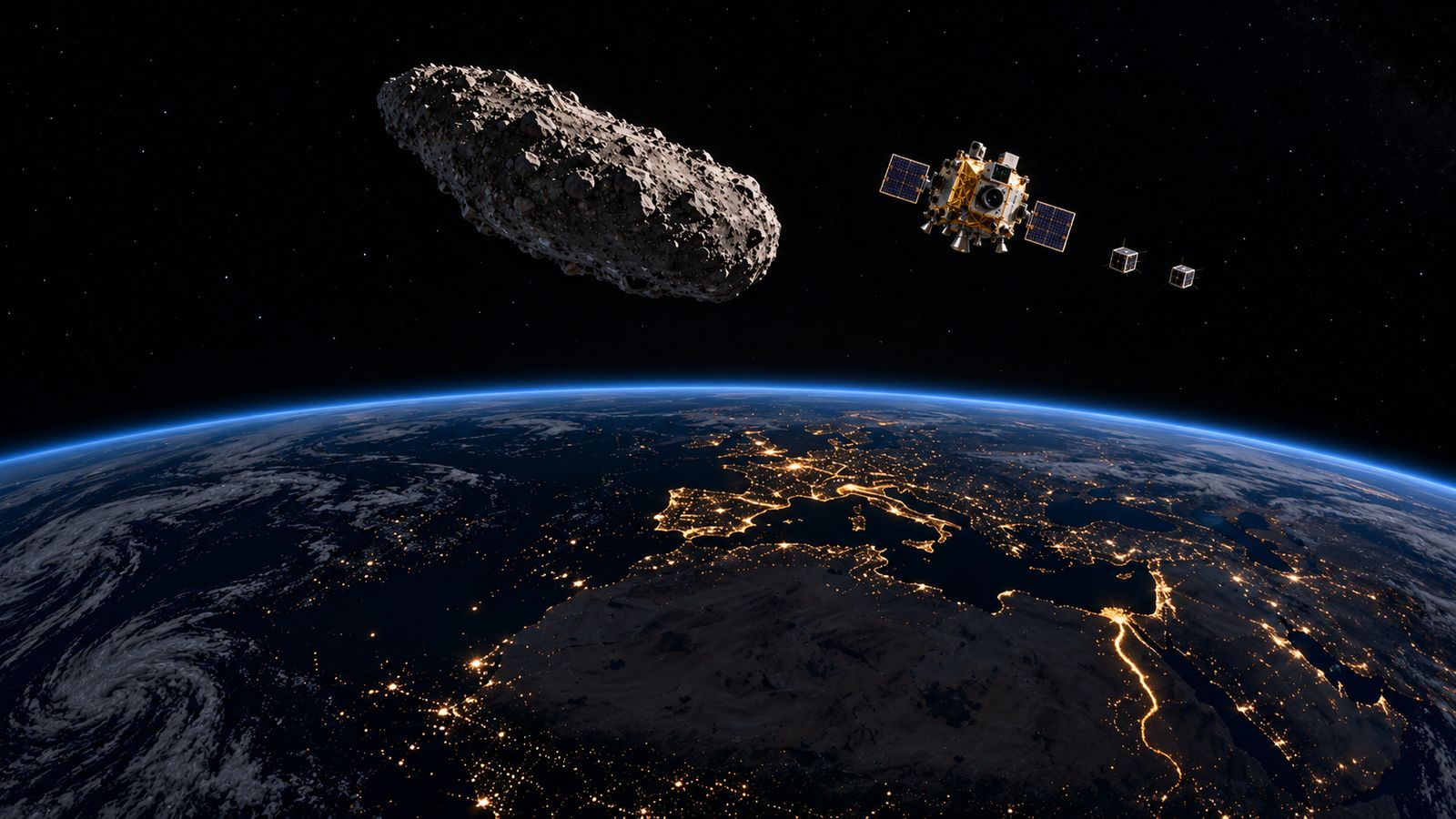
Object 99942 Apophis Closest approach 2029-04-13 21:45 UTC Altitude 31,900 km Relative velocity 7.4 km/s Impact probability 0
Friday 13 April 2029 · Site to be announced

We saw it coming.

Twenty-five years ago Apophis was the most dangerous asteroid ever found. On 13 April 2029 it passes closer than our satellites, and we know to the minute where it will be. Thousands of us will gather under one dark sky to watch the near miss we earned.

000Days
00Hours
00Min
00Sec
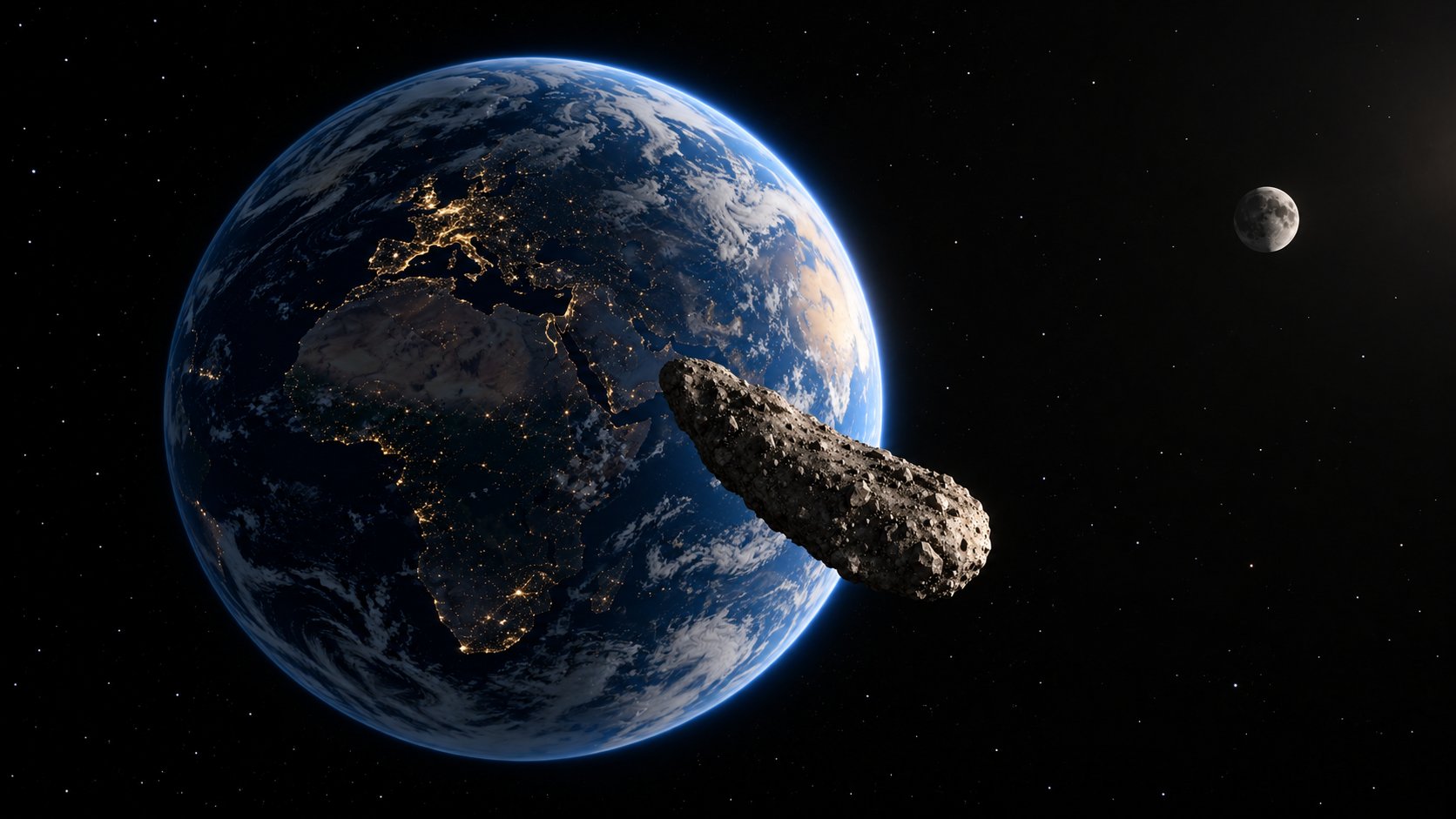
Illustration · Apophis passing Earth
01 · The Pass By

Inside the satellite belt

375 meters of rock, moving at 7.4 km per second, threading the ring where our weather and communication satellites orbit. An object this size comes this close roughly once every 5,000 to 10,000 years. This time half the planet can watch it with the naked eye.

A Earth and Moon · to scale
MOON'S ORBIT −18H −12H −6H +6H +12H +18H WITHOUT EARTH'S GRAVITY ACTUAL PATH EARTH B TO SCALE · 1 PX = 2,400 KMPATH TURNS ~27°
B Close-up · to scale
−1H−30M+30M+1H 31,900 km CLOSEST 21:45 UTC EARTH GEOSTATIONARY RING35,786 KM UP TO SCALE · 1 PX = 192 KM±90 MINUTES AROUND CLOSEST APPROACH
Top-down, in the plane of Apophis's path. Computed from its approach speed and distance; the orientation on the page is illustrative. Earth's gravity bends the path about 27°, most of it within a few hours of closest approach.
Designation
99942 Apophis
Diameter
~375 m
Closest approach
13 Apr 2029 21:45 UTC
Altitude
31,900 km
Peak brightness
mag 2.8
Visible to
up to 7.6 billion
Impact probability
0

From the ground it looks like a bright star moving steadily across the sky, fast enough to see it shift against the stars in a minute or two.

02 · The record

From threat to spectacle

Apophis is a planetary defense success story. We found it, measured it, ruled out every impact, and sent spacecraft to meet it. The near miss is the proof that watching the sky works.

  1. 2004Discovered at Kitt Peak, Arizona.Tracking begins
  2. Dec 2004Early orbits give a 2.7% chance of impact in 2029, the highest threat rating ever recorded.Torino 4
  3. 2013New observations rule out a 2036 impact.Risk falling
  4. 2021Radar rules out impact for at least the next 100 years.Risk: 0
  5. 2028ESA's Ramses launches to fly alongside it through the pass.Escort en route
  6. 13 Apr 2029Closest approach. We watch it pass, together.The gathering
03 · The name

Named for the end of the world

In Egyptian myth, Apophis is the serpent of chaos who tries to swallow the sun every night, and every night is held back. Astronomers chose the name in 2004, when this rock looked like it might be the real thing.

The ancient story ends the same way ours does. The light holds.

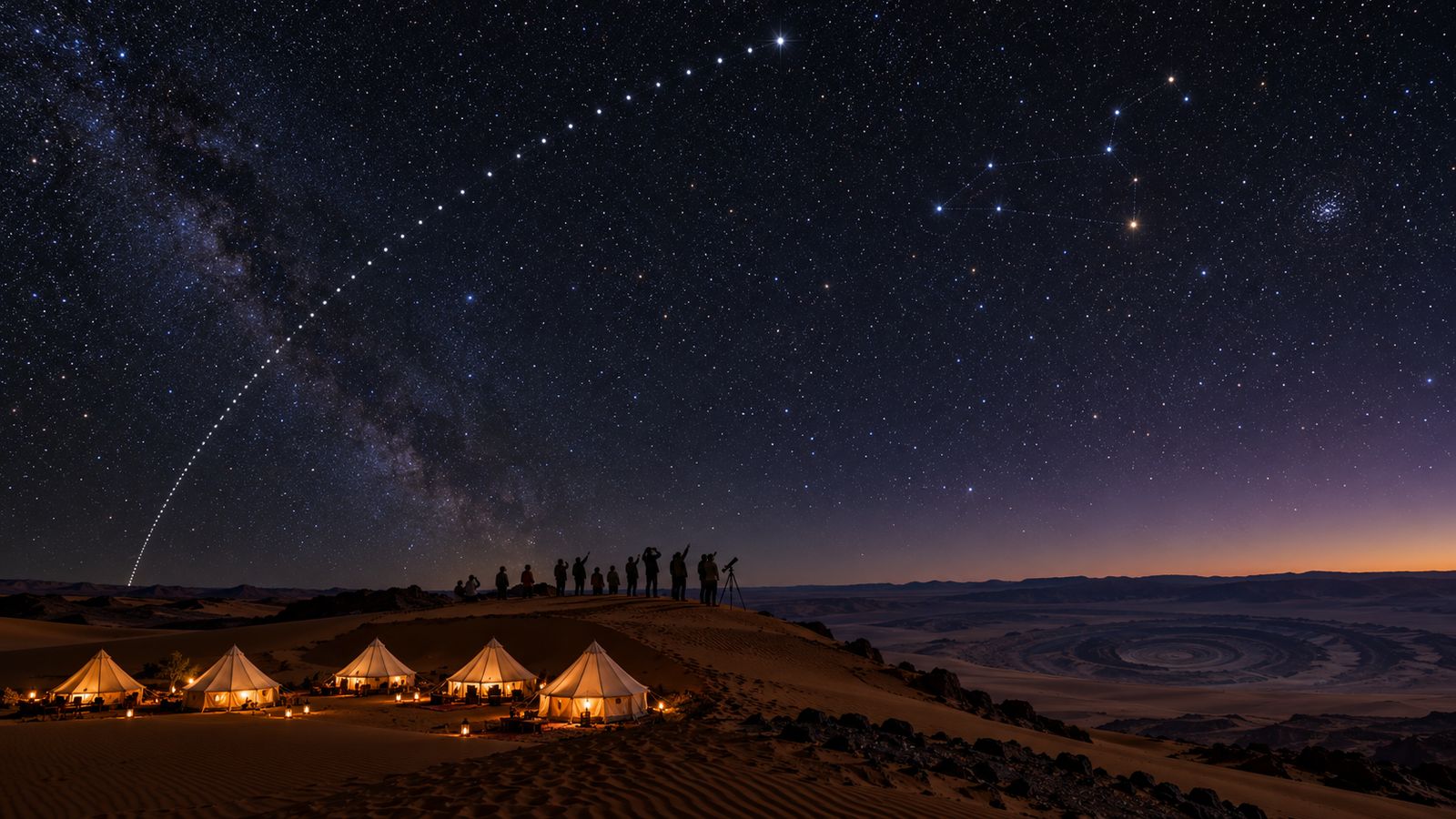
The Milky Way coiling like a serpent over a dark desert, with a single bright moving point crossing the sky and a thin line of sunset on the horizon
Illustration · The serpent in the sky
04 · Where to see it

The best seats on Earth

Apophis is visible to the naked eye across Europe, Africa, the Middle East and western Asia. The best views are where it passes high in a dark, dry sky, ideally while it's still up at closest approach. North America sees almost nothing. Our site is still to be announced.

RegionPeak mag.HeightBest local timeClear skies, mid-AprilUp at 21:45 UTCNotes
Canary IslandsTeide, La Palma2.8~75°9:30–10:30 pm71%YesObservatory peaks sit above the clouds
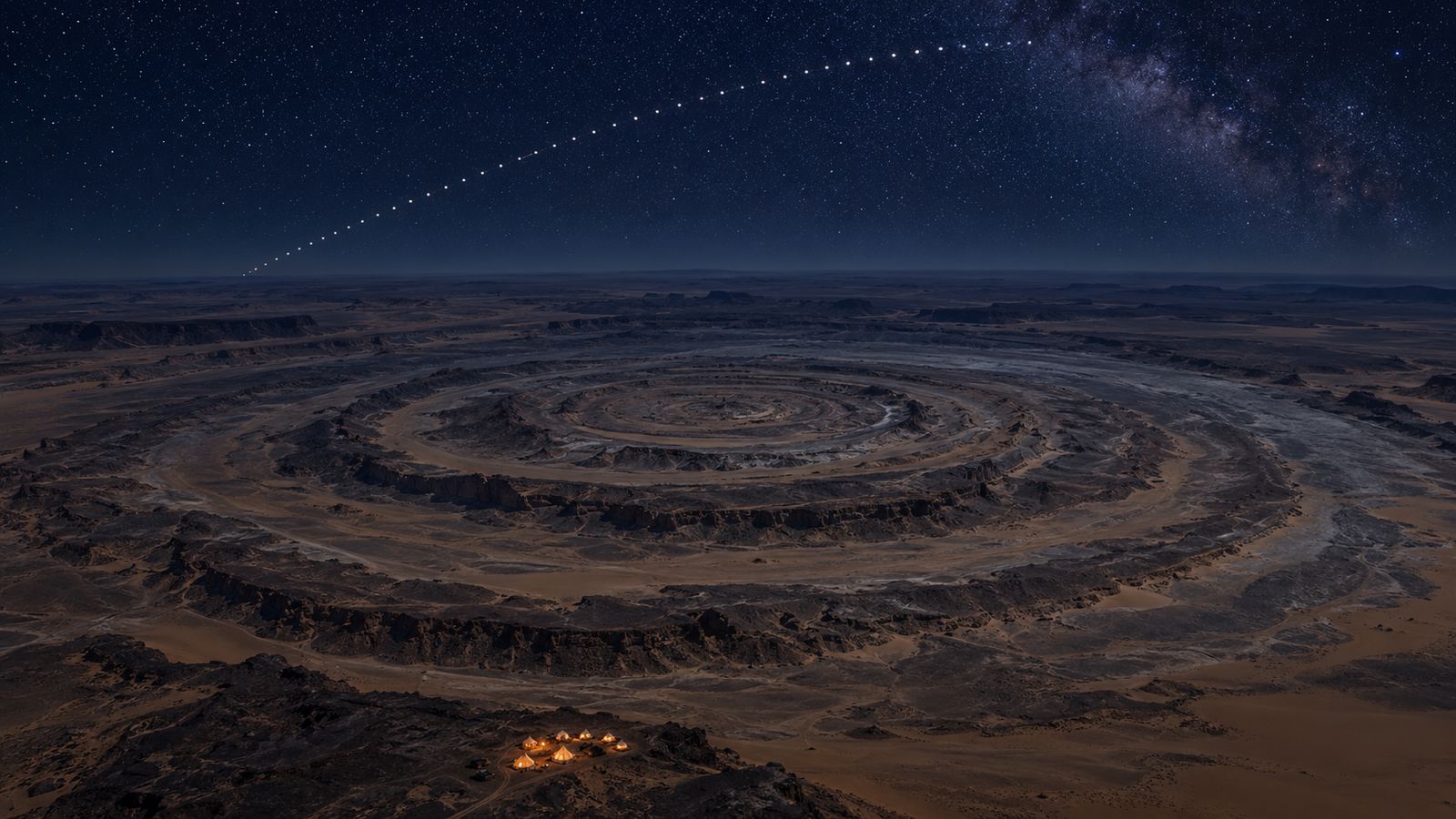
MauritaniaAtar, Richat Structure2.8~79°8:30–9:00 pm72%YesDeep Sahara, nearly overhead
MoroccoOuarzazate, Sahara edge2.8~69°9:30–10:00 pm76%YesDesert camps, easy access
Southern EuropeSpain, Sicily, Malta2.8–2.950–62°10:30 pm63–67%YesShort flights, more cloud risk
EgyptLuxor, Western Desert2.9~58°10:00–10:30 pm82%NoVery clear, sets before closest approach
JordanWadi Rum2.9~53°11:00–11:30 pm79%NoVery clear, sets before closest approach
NamibiaSossusvlei2.9~61°10:00–10:30 pm86%NoClearest skies, sets before closest approach

Lower magnitude means brighter. Heights and times from NASA JPL's ephemeris; clear-sky odds are long-term averages for the nearest town (WeatherSpark), and mountaintop sites usually do better.

05 · Concepts

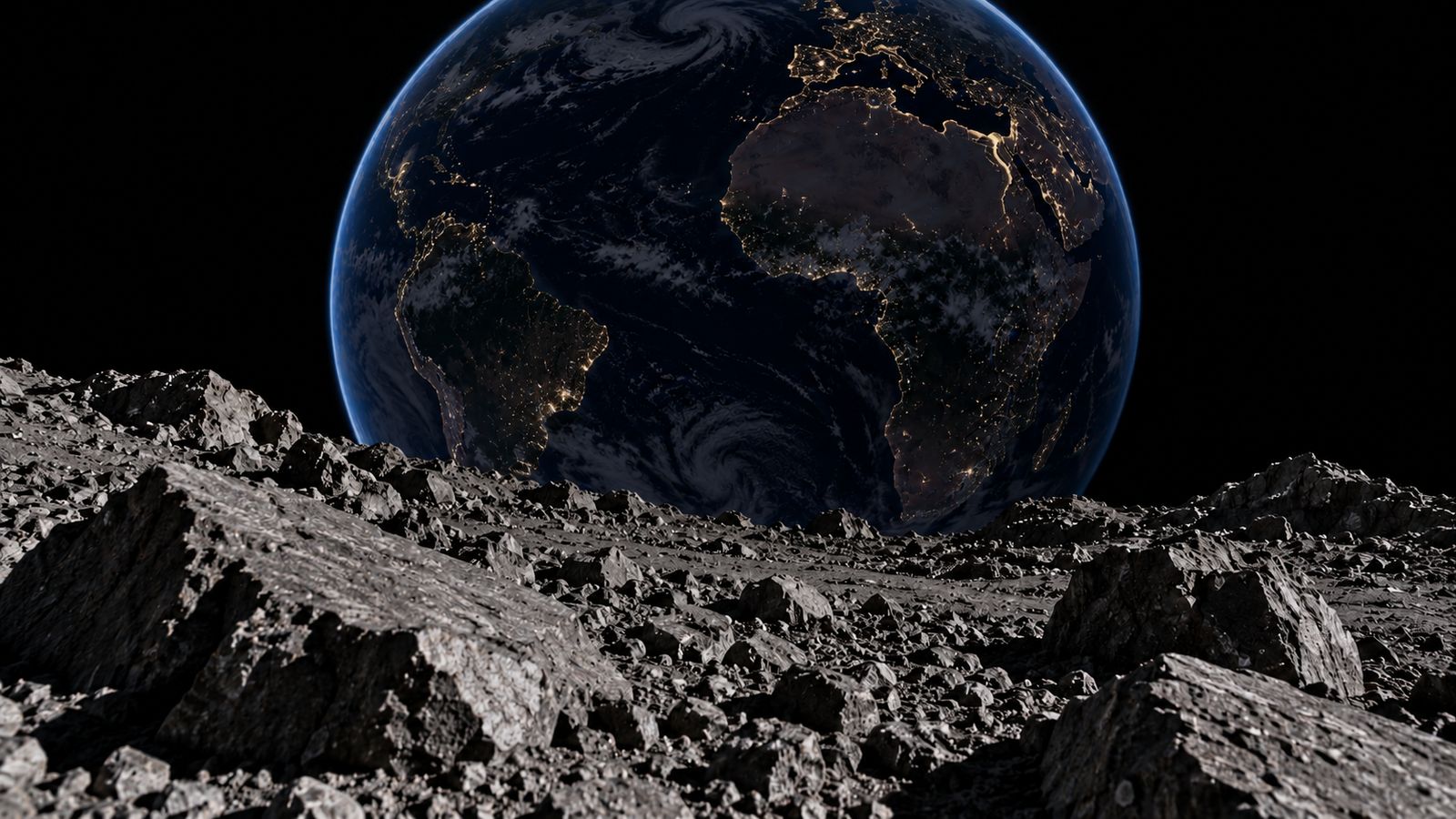
How the night could look

Concept imagery. From Earth, Apophis appears as a bright moving star.

06 · Questions

Questions

Is Apophis going to hit Earth?

No. Radar measurements in 2021 ruled out any impact in 2029 and for at least the next 100 years. It passes about 31,900 km above the surface and heads back out into space.

Will I be able to see it?

Yes, with clear, dark skies and no telescope. It looks like a bright star, about as bright as the Big Dipper, moving steadily across the sky. Binoculars and telescopes on site show it sliding against the stars in real time.

When exactly is it?

Friday 13 April 2029. Apophis is brightest around 20:35 UTC and closest at 21:45 UTC. The Moon is new that night, so the sky is as dark as it gets.

Where is the gathering?

To be announced. The full pass is visible from Europe, Africa and the Middle East, and we're choosing a site with dry air, dark skies and Apophis nearly overhead. Join the list to hear first.

Why not watch from home?

From North America you'll barely see it. Elsewhere, city lights and clouds can hide a star-like object. And a once-in-thousands-of-years moment is better shared.

Are spacecraft going there?

Yes. ESA's Ramses arrives before the flyby and rides along with Apophis through it. NASA's OSIRIS-APEX arrives afterward to study how Earth's gravity changed it.

Who is behind this?

IMXP, the team behind Iceland Eclipse and the Eclipse Trilogy, building immersive gatherings around the sky's biggest moments.